Fence Company in Stockton, CA: Installation, Repair & Gates
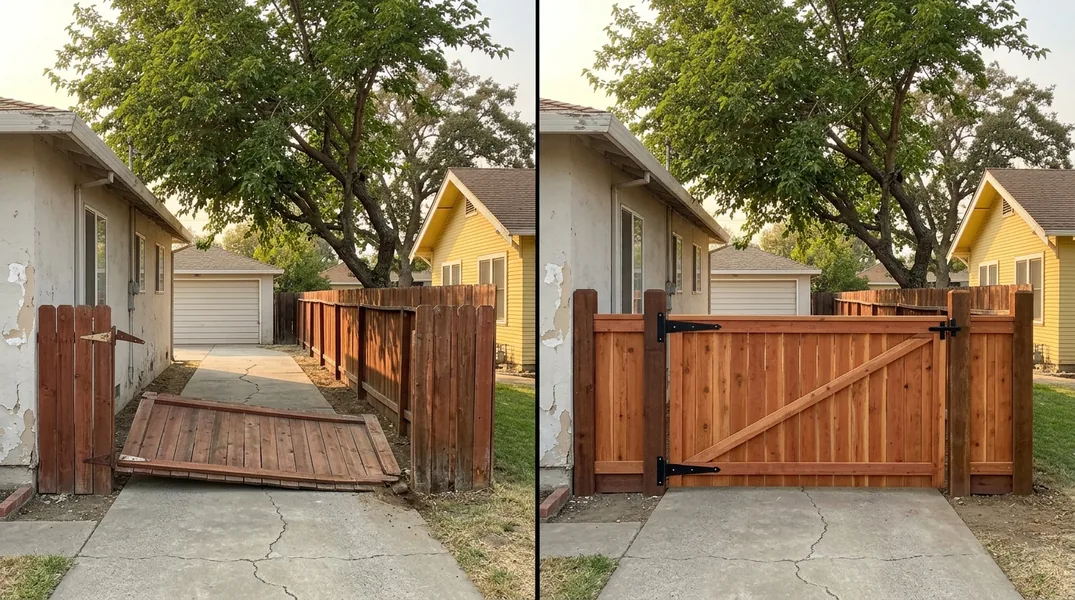
Homeowners searching for a fence company near me in Stockton usually want the same three things: someone who answers the phone, someone who knows why the last fence failed, and someone who will tell them the truth about whether it can be saved. Stockton Fencing is a local shop, not a national franchise, and the same crews who quote your job are the crews who build it. We install wood and privacy fencing, vinyl and PVC, chain link, and aluminum and ornamental iron. We repair fences, reset and replace posts, hang and repair gates, install automatic driveway gates, and put storm-damaged runs back on their line.
This is flat Central Valley ground with heavy clay soil, hot dry summers, damp winter tule fog, and Delta breezes that push on every panel. In subdivisions from Weston Ranch out toward Lathrop, Manteca, and Tracy, and on the older lots through Midtown and the Miracle Mile, nearly every yard is fenced, and nearly every fence is working against the same ground movement. We serve Stockton, Lodi, Manteca, Tracy, Lathrop, and the surrounding areas. If you want a straight answer on repair versus replacement, start with a free estimate.
Why Fences Lean in Stockton: Clay Soil and Rotted Posts
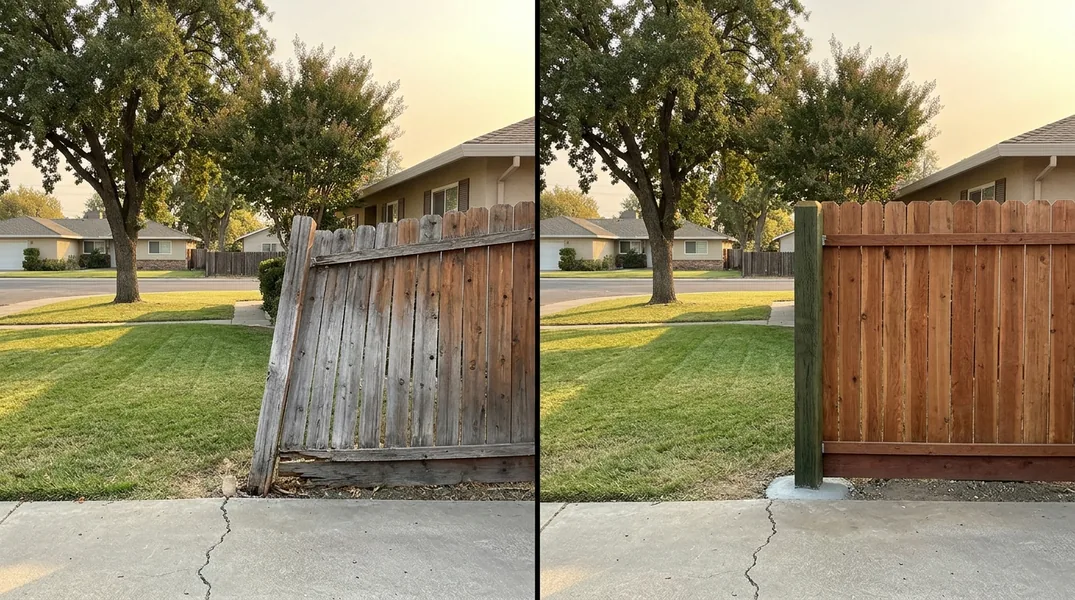
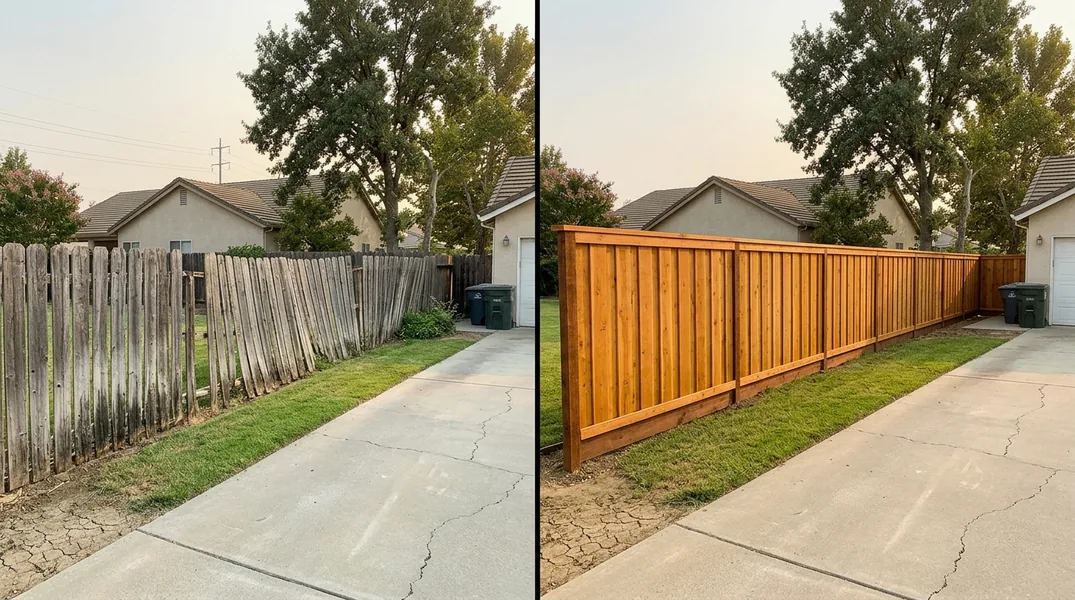
Most leaning fences in Stockton are a post problem, not a panel problem. The soil here is expansive clay and hardpan. It swells when the winter rains soak it and shrinks through the dry months, and that cycle works a post back and forth season after season until it racks out of plumb. Add rot at the ground line, where damp soil and sprinkler overspray keep the wood wet at exactly the point carrying the load, and a post that looked fine in July is loose by February. The pickets and rails are often still sound. The post is what failed.
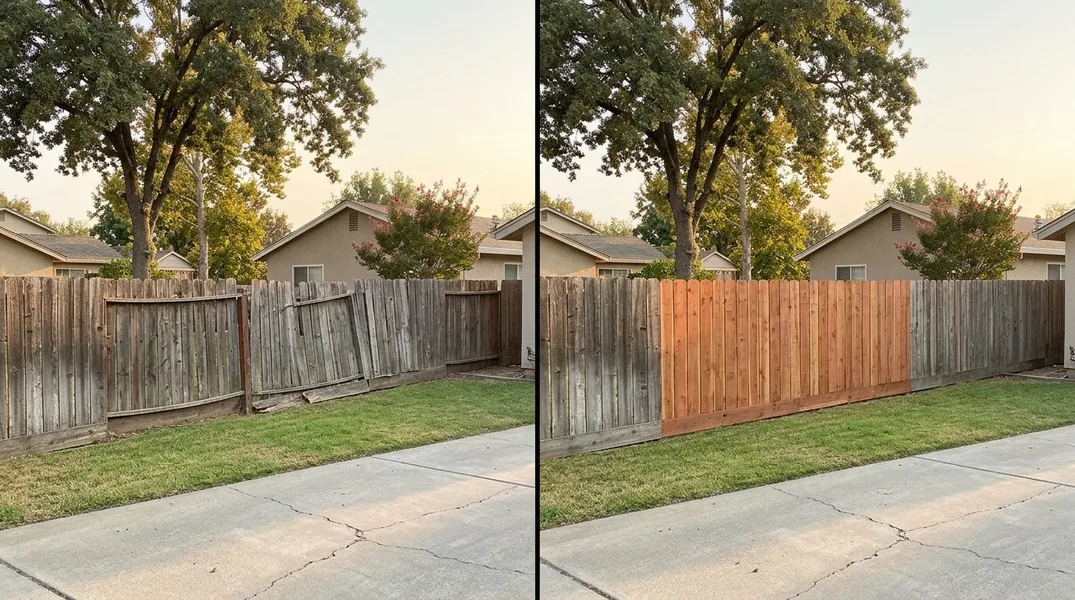
So we walk the whole fence line rather than the one section that was called in. We test every post, not just the one that moved, and we check whether the concrete footing itself has heaved or the post has rotted off inside a footing that is still solid. That distinction decides the fix. Where the pickets and rails are sound and a handful of posts have failed, resetting or replacing those posts saves the rest of the run, and that is usually the better spend. Where the posts have gone at the ground line along the whole line, the fence is at end of life, and patching it section by section costs more over five years than replacing it once. We quote both when both are real options, and we say plainly which one we would choose.
On rotted wood we stay in our lane: we replace wood that has decayed, and moisture at the ground line is the cause. We do not perform termite or pest inspections, apply chemical treatments, or carry out pest control, which is a separate regulated trade in California. If your fence is leaning, call (209) 546-6481, or read more about Fence Post Repair & Replacement and then request a free estimate.
Storm Damage Fence Repair in Stockton
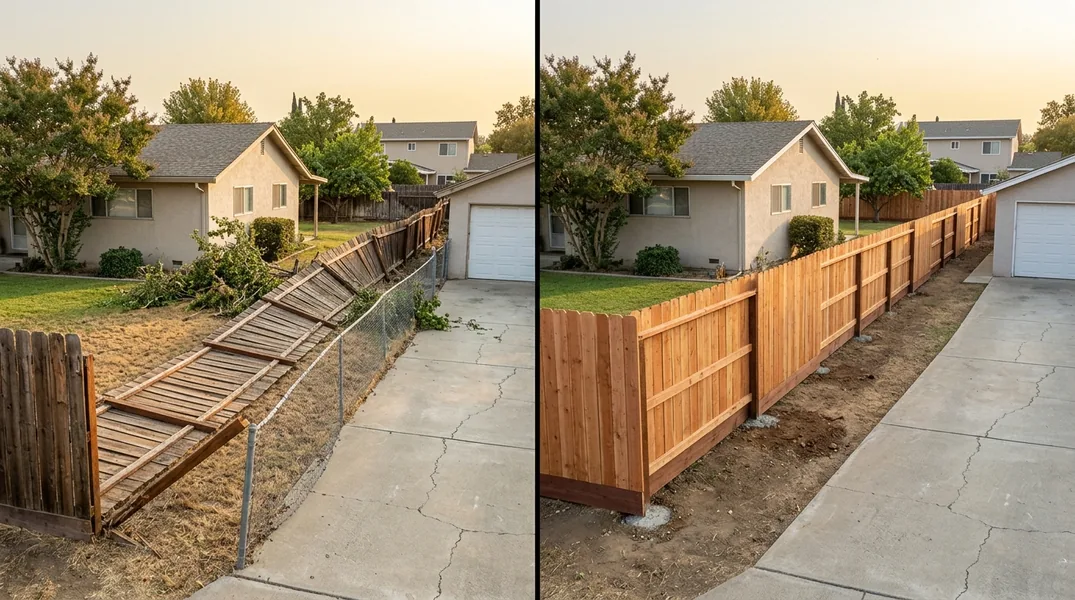
Winter atmospheric-river storms and afternoon Delta breezes do a predictable kind of damage here: whole runs pushed over on the same fence line, posts snapped at grade, and panels lifted out of their rails. A fence rebuilt after a storm should come back with better posts than the ones that failed, set deeper and in concrete where the old ones were tamped, because the next storm will test the same line.
What we provide after storm damage is a free damage assessment, photographs taken section by section, and a written estimate the homeowner may choose to give their insurer. We help document the damage; we are not adjusters and we do not act on your behalf with your carrier. Coverage decisions rest with the carrier, and no outcome is promised or implied. We never offer to waive, absorb, discount, or pay any part of a deductible. There is no urgency pitch here: storm work is documented and priced honestly. See Storm Damage Fence Repair for what the assessment covers.
Cedar, Pine, Vinyl or Chain Link: Choosing for This Climate
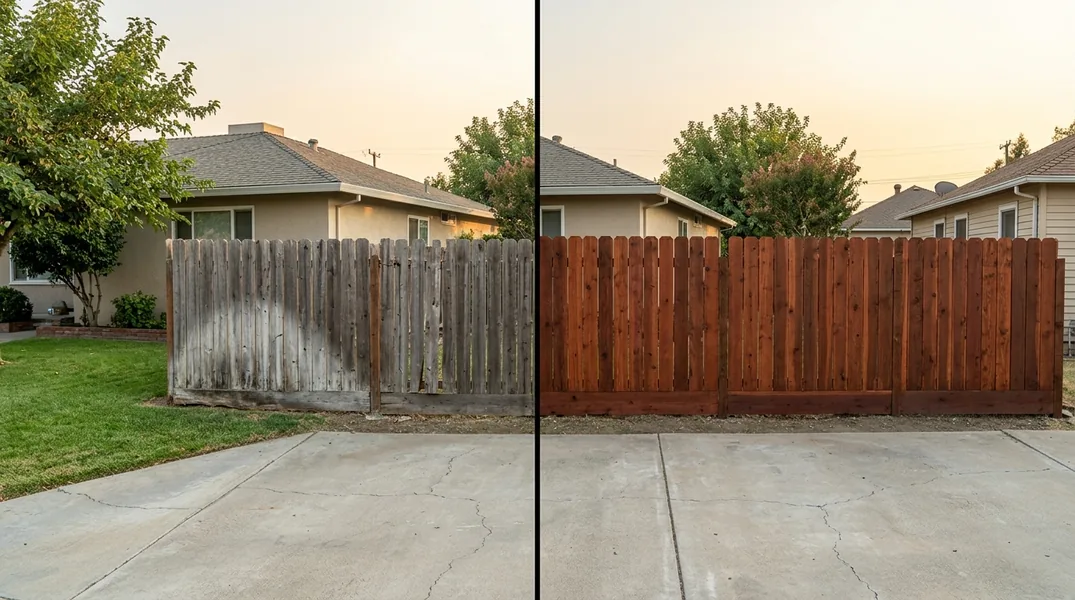
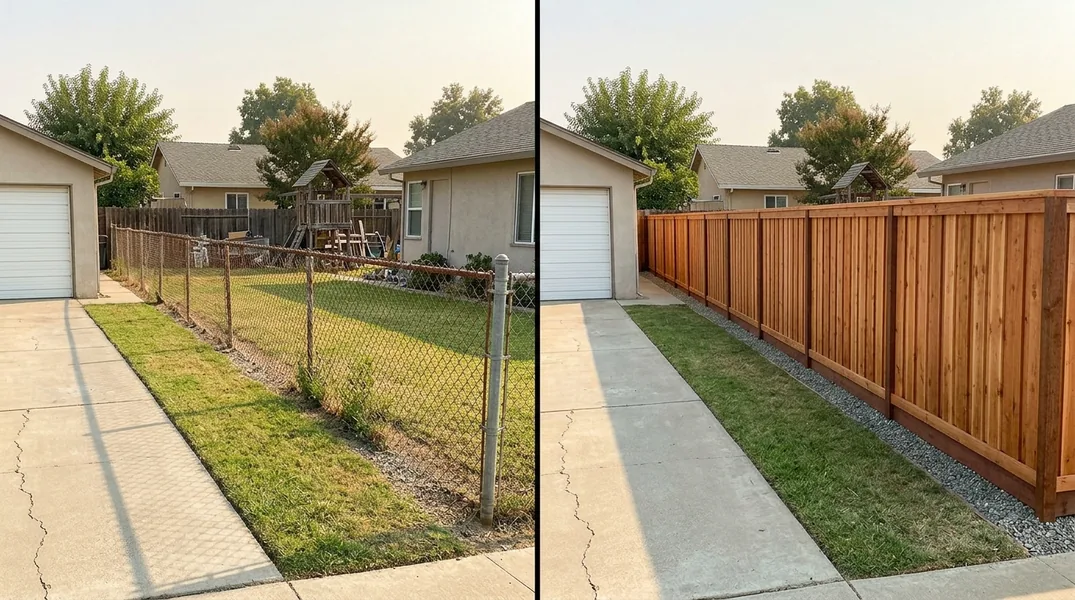
The honest comparison starts with cedar versus pressure-treated pine. Cedar is naturally decay-resistant, stays straighter, and takes stain well, which is why it is the default for a six-foot privacy fence on a side or rear line. Pressure-treated pine costs less and is the smarter budget call when the fence is doing a job rather than making a statement, provided the board bottoms are kept clear of sprinkler overspray. Vinyl is low maintenance and genuinely beats wood where you want no staining cycle at all, but it does not shrug off a shifted post any better than wood does. Chain link is the toughest per dollar, and gauge and mesh size matter more than most homeowners are told; galvanized lasts, and black powder-coated looks better at the frontage. Aluminum and ornamental iron suit pool barriers and historic frontages, and racked installation lets the panels follow grade instead of stepping.
Maintenance is what decides lifespan. Under this sun and the damp winter fog, a cedar fence wants cleaning and re-staining every two to three years, and that cycle is the difference between a fence that lasts closer to ten years and one that reaches twenty. We quote by the linear foot and do it on site, because slope, access, tear-out, and gate count change the number. Compare Wood & Privacy Fence Installation with Vinyl & PVC Fence Installation before you decide.
Permits, HOA Rules, Property Lines & Pool Barriers
Permits, height, setback, and material rules are set by the city or county and vary across Greater Stockton. In most jurisdictions a fence above a certain height needs a permit, and many cities in the area require corner-visibility clearances at intersections, but requirements vary by city and county, so treat any figure you hear as a starting question rather than an answer. In master-planned communities, deed restrictions and HOA architectural standards commonly govern height, material, and color, and architectural approval is usually needed before work starts, so it is worth checking first. On property lines: we are fence contractors, not land surveyors. We install on the line the homeowner identifies, working from their existing survey or plat. Determining a boundary is the work of a licensed land surveyor, and confirming the line, plus any neighbor or association consent, in writing beforehand, avoids most disputes.
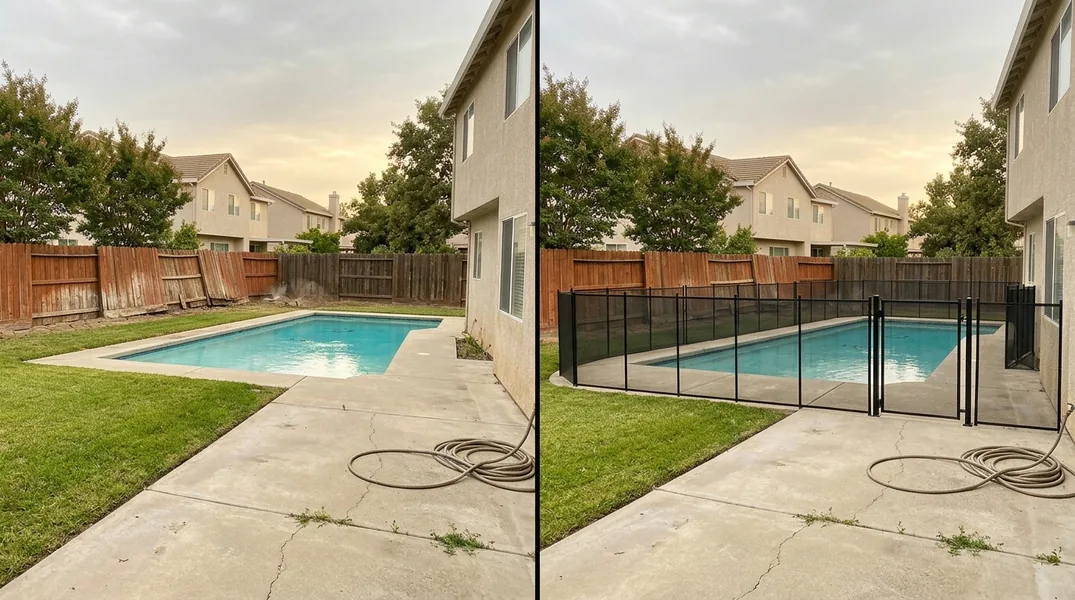
Pool fencing is installed to meet the pool barrier codes that apply at the address, with self-closing, self-latching hardware. Setting posts is excavation, so we request California 811 utility locates before digging. Locates cover participating operators only and do not mark private lines such as irrigation or landscape lighting, so tell us about those. California requires a CSLB C-13 Fencing Contractor license for this work once a project reaches $1,000 in combined labor and materials or requires a building permit. Requirements vary, always verify with the Stockton building department and your HOA before starting your project. Questions? Contact us.
Ready to get started? Stockton Fencing serves in Stockton and surrounding areas. Book your free on-site estimate today.
Get Your Free Estimate