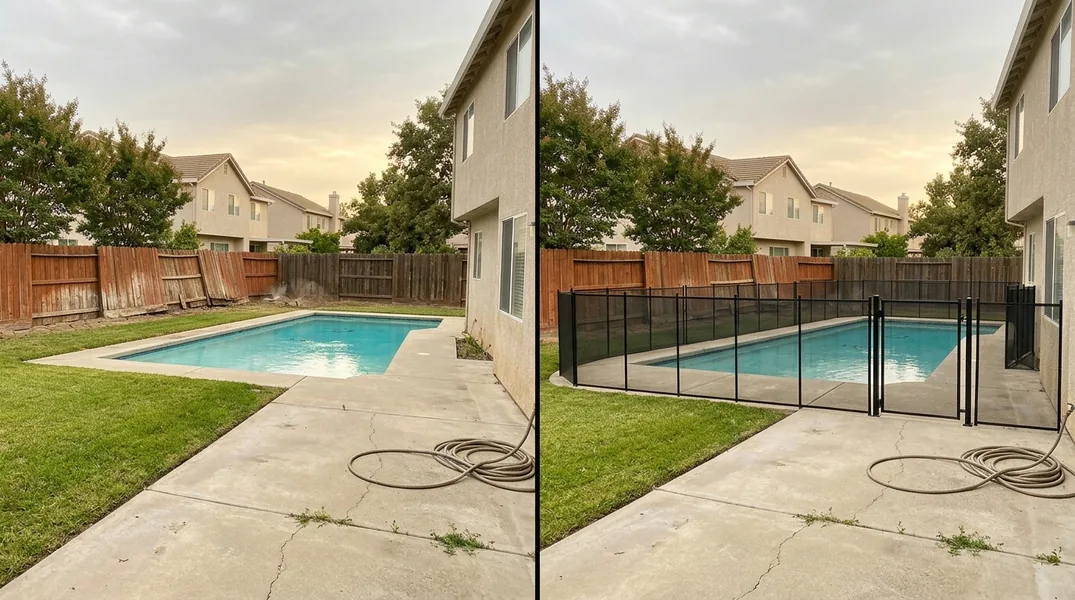
Why California Takes Pool Fencing Seriously
If you're a homeowner in Stockton with a pool, you already know that backyard safety is a top priority. California has some of the strictest pool safety laws in the country, and for good reason. Drowning remains the leading cause of accidental death for children under five, and proper fencing is one of the most effective ways to prevent tragedy. Before you start planning your pool fence installation, it's important to understand what the state requires and what questions you should ask your contractor.
California's pool safety regulations are outlined in the California Building Code and the Swimming Pool Safety Act. These rules apply to both new pool construction and major renovations, and in many cases, they also apply when a home with an existing pool changes ownership. The requirements focus on creating a barrier that separates the pool from the house and the yard, making it harder for a child to reach the water unsupervised. As you research pool fence code requirements, keep in mind that local jurisdictions like Stockton may have additional rules or interpretations, so it's always smart to verify with the city before you build.
Pool Fence Height Requirements and Barrier Rules
One of the first questions homeowners ask is about pool fence height requirements. In California, the minimum height for a pool barrier is generally 60 inches (5 feet) as measured from the outside of the fence. The fence must not have any gaps, footholds, or handholds that a child could use to climb over. If your fence is made of vertical slats, the spacing between them should be small enough to prevent a child from squeezing through. Chain link fences can work if they meet the height requirement and have small enough mesh, but many homeowners prefer the look and privacy of a wood or vinyl fence.
It's also important to understand that the barrier must completely separate the pool from the home and the rest of the yard. If your house forms one side of the barrier, any doors leading to the pool area must be equipped with an alarm or a self-latching device. Gates are another critical point: every gate in the pool barrier must be self-closing and self-latching, and the latch should be high enough that a young child cannot reach it. These self closing pool gate requirements are non-negotiable and are often the first thing an inspector checks. When you plan your Wood & Privacy Fence Installation, make sure your contractor understands these gate specifications.
Questions to Ask Before Your Pool Fence Installation
Before you hire anyone for pool fence installation, sit down and make a list of questions. Start with the basics: Does the contractor have experience with California pool code requirements? Will they pull the necessary permits, or will you need to handle that yourself? Ask for examples of pool fences they've installed in the area and whether they can provide references from other homeowners in Stockton or nearby communities like Lodi and Manteca. A reputable installer will be happy to share their process and explain how they ensure compliance.
You should also ask about materials and maintenance. Wood fences are a popular choice for privacy and aesthetics, but they require regular upkeep to stay safe and functional. Vinyl and PVC fences are low-maintenance and can mimic the look of wood, while aluminum and ornamental iron fencing offers durability and visibility. Each material has pros and cons, and the right choice depends on your budget, your style preferences, and how much maintenance you're willing to do. Don't forget to ask about the gate hardware: self-closing hinges and self-latching mechanisms should be rust-resistant and adjustable, and you'll want to know how to test them regularly. Finally, ask for a written free estimate that breaks down materials, labor, and permit costs so you can compare bids fairly.
Pool Fence Code Requirements Near Me: Local Permits and Inspections
When you search for pool fence code requirements near me, you'll quickly discover that local rules can vary. In Stockton, pool fences are typically subject to permitting and inspection by the city's building department. The permit process helps ensure that your fence meets both state and local safety standards, and it can protect you if you ever sell your home. Skipping the permit might save time upfront, but it can create headaches later, especially during a real estate transaction. A professional fence contractor should be familiar with the local permitting process and can guide you through it.
Inspections usually focus on the height of the barrier, the spacing of the fence components, and the operation of gates and latches. Inspectors may also check that the fence is sturdy and that there are no climbable objects nearby, such as benches, planters, or tree branches. To avoid surprises, walk your property with your contractor before installation and identify any potential issues. If you're also considering updates to other parts of your yard, such as a new Vinyl & PVC Fence Installation or a Chain Link Fence Installation for a different area, mention it during the consultation. Sometimes combining projects can save on mobilization costs and streamline the permitting process.
Choosing the Right Fence Material for Safety and Style
The material you choose for your pool fence affects safety, maintenance, and curb appeal. Wood privacy fences are a classic option that can be built to meet height and spacing requirements, and they offer excellent privacy. However, wood needs periodic staining or sealing to prevent rot and warping, and you'll need to inspect it regularly for loose boards or damaged gates. Vinyl and PVC fences are growing in popularity because they resist moisture, insects, and fading, and they're easy to clean. Just make sure the product you choose is rated for structural use and can support self-closing gate hardware without sagging over time.
Aluminum and ornamental iron fencing is another strong choice. These fences are durable, low-maintenance, and provide good visibility, which some families prefer for supervision. The vertical bars must be spaced closely enough to meet code, and gates need to be self-closing and self-latching. If you're unsure which material is best for your home, ask your contractor for recommendations based on your budget and lifestyle. You can also review pricing online to get a rough idea of costs before you commit. Remember that the cheapest option isn't always the safest or the most durable, and a well-installed fence is an investment in your family's peace of mind.
Final Steps: Permits, Professionals, and Peace of Mind
Installing a pool fence is one of the most important safety upgrades you can make as a homeowner. Before you break ground, confirm the permit requirements with the city, choose a contractor who understands California pool fence code requirements, and double-check the details of your gate hardware. A self-closing, self-latching gate that's properly installed and maintained is your first line of defense. It's also wise to pair your fence with other safety measures, such as pool alarms, safety covers, and swimming lessons for children.
If you're ready to move forward, Stockton Fencing is here to help. Our team specializes in pool fence installation and can answer your questions about height requirements, materials, and permits. We serve homeowners throughout Stockton and the surrounding areas, and we're committed to building fences that are safe, beautiful, and built to last. Call us at (209) 546-6481 or visit our website to request a free estimate today. We'll walk you through the process and help you choose the right fence for your pool and your family.
Looking for a professional fence contractor in Stockton? Stockton Fencing responds fast for all your fence needs.
Get a Free Quote